
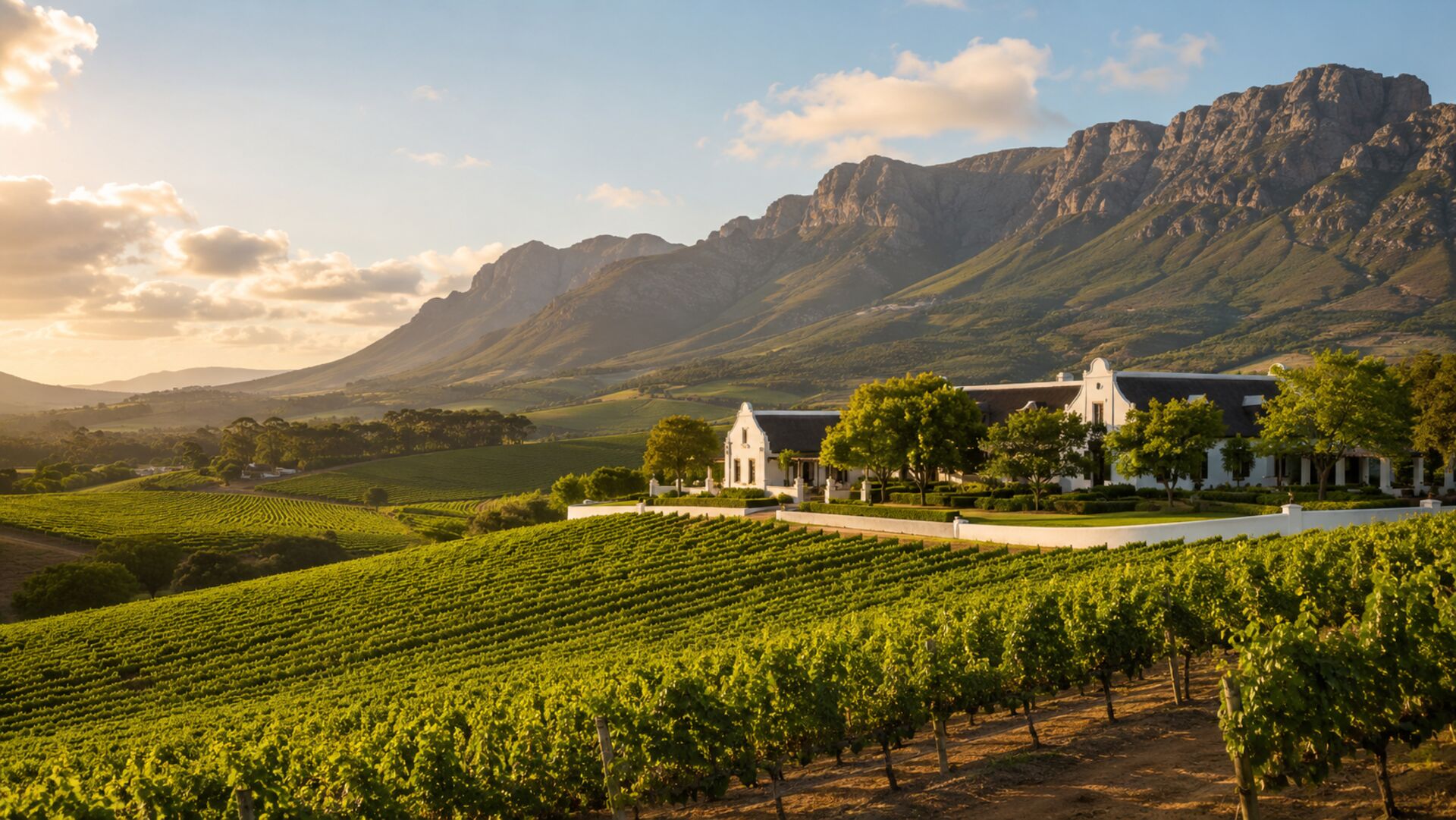
A word for it since 1672.
In 1672, an assistant cook aboard the Dutch ship De Pijl, anchored in Table Bay, distilled Cape wine into brandewijn — burnt wine. It was more than a century before anyone filled the first barrel of bourbon.
English shortened brandewijn to brandywine, then to brandy. Afrikaans kept the word whole: brandewyn. For a spirit bottled above 140 proof, “burnt wine” isn’t a slogan — it is the literal name of the category, in the language of the people who make it.
Cape Brandy is defined in South African law, not asserted by us: pot-still distilled, matured no less than three years in oak casks of no more than 340 litres. Cape Cask is earned on that specification — then taken far past its minimum, to sixteen years.